

Global Condensing Unit Market Accelerates in 2026: China Manufacturers Lead Supply, Efficiency, and Custom OEM/ODM Solutions
The global condensing unit market is estimated at about USD 49.7 billion in 2026, with strong long-term growth driven by commercial refrigeration, industrial cooling, cold chain expansion, and energy-efficient equipment upgrades.
As a core component of refrigeration and air conditioning systems, the condensing unit integrates the compressor, condenser, fan, control system, and related accessories to release absorbed heat into the surrounding environment. It is widely used in cold rooms, display cabinets, food processing facilities, pharmaceutical storage, commercial retail, and industrial cooling applications.
For international buyers, distributors, engineering contractors, and project purchasers, China condensing unit manufacturers, suppliers, and factories have become important partners in global procurement. Chinese manufacturers can provide wholesale supply, custom specifications, OEM/ODM development, multi-refrigerant configuration, and project-based delivery, helping buyers meet different climate conditions, voltage standards, refrigerant regulations, and application requirements.
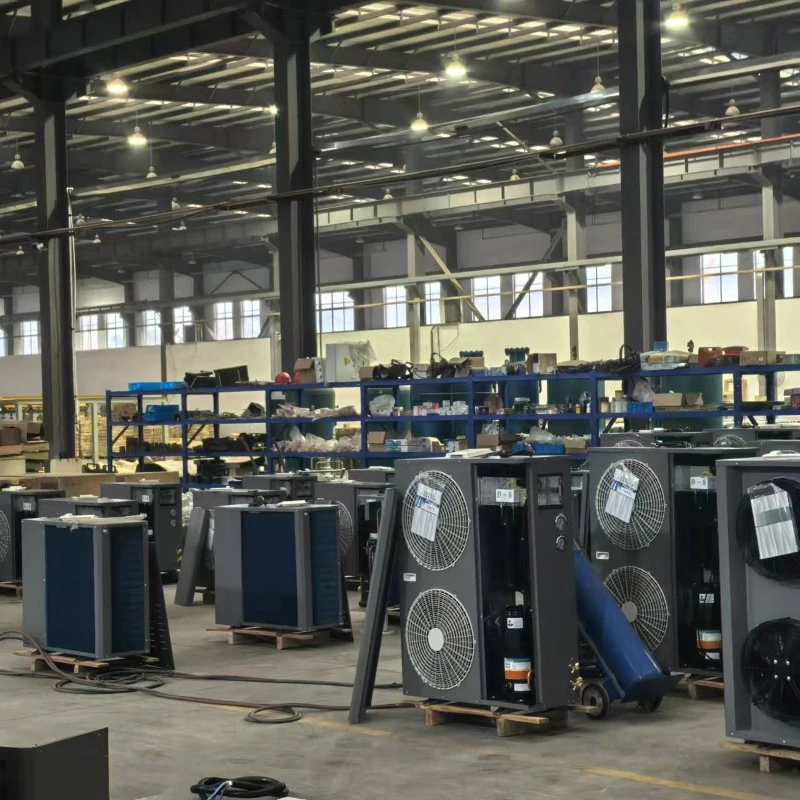
Why Condensing Units Are in Strong Demand in 2026
Condensing units are widely used because they provide reliable heat rejection and stable refrigeration performance. A typical condensing unit compresses refrigerant gas, raises its temperature and pressure, and then dissipates heat through the condenser coil. The refrigerant then condenses into a high-pressure liquid and continues circulating through the refrigeration system.
- Commercial refrigeration expansion, including supermarkets, convenience stores, cold storage rooms, and fresh food retail.
- Industrial refrigeration growth, especially in food processing, beverage production, pharmaceutical storage, and chemical cooling.
- Cold chain infrastructure upgrades, supported by higher requirements for temperature control, energy efficiency, and product safety.
- Replacement of older equipment, as buyers move toward higher-efficiency, lower-noise, and more environmentally friendly systems.
- Custom project demand, where buyers require specific compressor brands, refrigerant types, cooling capacity, voltage, enclosure structure, and installation form.
Key Technology Trends for Condensing Units
Variable-frequency compressors and intelligent control systems help condensing units adjust cooling output according to real-time load demand.
Modern condensing units are increasingly designed to support multiple refrigerants for different countries and project standards.
Remote monitoring, fault diagnosis, and predictive maintenance help reduce downtime and improve management efficiency.
Improved fan structures, enclosure insulation, and compressor mounting help balance cooling performance and noise control.
Modular condensing units support faster installation, expansion, maintenance, and OEM/ODM customization.
Manufacturers can customize cooling capacity, refrigerant, voltage, cabinet structure, control system, and compressor configuration.
Common Types of Condensing Units for B2B Procurement
Different projects require different condensing unit types. China manufacturers and suppliers usually provide the following mainstream configurations:
| Type | Typical Features | Suitable Scenarios |
|---|---|---|
| Air-cooled condensing unit | Easy installation, no cooling water system required | Cold rooms, retail refrigeration, small and medium commercial projects |
| Box type condensing unit | Enclosed structure, better protection, lower noise | Indoor equipment rooms, supermarkets, food storage, pharmaceutical cold chain |
| Outdoor condensing unit | Weather-resistant design, flexible installation | Cold storage projects, industrial refrigeration, outdoor |

